
How to Check Criminal History in Fort Smith
Begin with the office closest to the event. The Fort Smith Police Department is the best first stop for an offense report, collision report, tip, or other police-created record. Fort Smith District Court holds city-level court matters. A felony or other Circuit Court case belongs with the Sebastian County Circuit Clerk, not the city. Recent custody information sits in the sheriff's inmate system, and a statewide repository result comes from Arkansas State Police.
Use this five-step path to keep unlike records separate:
- Check the Fort Smith Police channel tied to the event, such as an online offense report or records request.
- Request the incident report with the name, date, location, and report number you know.
- Ask Fort Smith District Court about a city citation, traffic matter, or lower-level criminal case.
- Move to Sebastian County criminal court cases and county arrest history for filed Circuit Court charges or a county booking.
- Use the official Arkansas State Police system when a statewide criminal-history product is the actual need.
Fort Smith Police Citizen Services
The police department's Citizen Services Portal groups several city tools in one place. Residents can file eligible online reports, send crime tips, view crime maps, and reach other police services. Those functions do not all produce the same record. A tip is information sent to police, an online report creates or supplements an incident record, and a crime map is a public awareness view rather than a certified case history.
For emergencies, call 911. The department lists 479-709-5000 for nonemergency contact. If an online option does not fit the event, use that line to identify the right police unit before submitting a request. A city police report may document an allegation without proving that a prosecutor filed a charge or that a court entered a conviction.
The Fort Smith Police Department
Fort Smith Police keeps the records created by its officers and routes public-record requests through its records process. The city's public-records instructions explain that writings and recordings made by public employees may be public, subject to legal exceptions. The same city page warns that marriage, divorce, property, vital, and some court records belong to county or state offices. That ownership guide matters because sending a police request for a divorce decree or a county court judgment only delays the search.
Give enough detail to identify the event. Useful facts include the involved person's name, the incident date, the street or location, and a report number when known. The records unit may need to review a file for exempt material before release. Juvenile information, active investigative material, and data protected by another law may not be released in full.
Fort Smith GovQA Requests
Fort Smith Police records requests run through the city's GovQA channel. The Fort Smith GovQA portal provides the request path and a way to track the city's response. State the record sought with care. A narrow request for a named incident on a known date is easier to route than a broad demand for every record about a person.
The image below comes from the official Fort Smith GovQA request service.
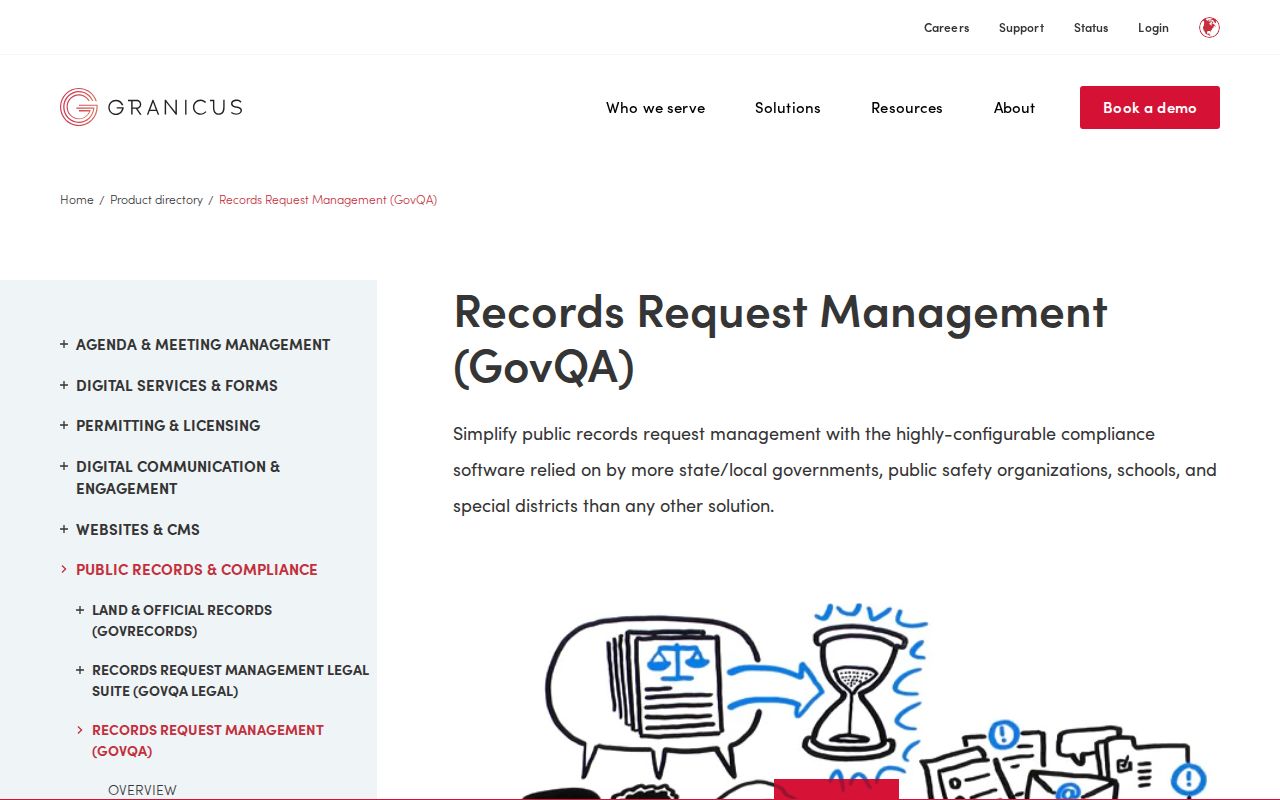
That request screen is for city-held material. It does not replace the Sebastian County jail inquiry, Circuit Clerk, or Search ARCourts when the desired fact is a booking, filed charge, hearing, or disposition.
Arrests and Bookings in Fort Smith
A Fort Smith officer creates an arrest record, but county custody creates a separate booking record. People arrested by Fort Smith Police may appear in the Sebastian County Adult Detention Center inquiry if they are booked into county jail. The inquiry can show a name, booking and global subject numbers, custody status, bond information, charges, release date, aliases, physical descriptors, address city and state, and a mugshot when one is available.
That booking display is not the final charge copy. The county's disclaimer directs readers to the Circuit Clerk for the actual charge. Cash-only bond also depends on where the charge was filed: county research says payment may be made to Fort Smith Police or the Adult Detention Center as the applicable record directs. Confirm the custodian before carrying cash or relying on a portal status.
Note: An arrest records an accusation and custody event, not a finding of guilt.
Fort Smith Accident Reports
Collision records follow a special route. Fort Smith Police says accident reports can only be found through its linked accident-report retrieval service. Do not assume a normal GovQA police-record request is the fastest route for a crash file. Start from the police department's official page and follow the accident-report link so the search reaches the designated system.
A collision report can identify drivers, vehicles, location, and the officer's recorded account, but it is not a criminal court disposition. If a crash led to an arrest or criminal citation, search the relevant police, booking, and court channels separately. The report and court file describe different stages of the event.
Fort Smith Municipal Court Records
Fort Smith District Court handles the city's limited-jurisdiction criminal, traffic, ordinance, and municipal matters. The clerk is the proper source for docket status, payments, and copies in those cases. Circuit Court handles felony matters and other cases within its jurisdiction. When the arresting agency is Fort Smith Police, the agency name alone does not prove which court has the resulting case.
| Court Name | Fort Smith District Court |
|---|---|
| Case Types Heard | Traffic, ordinance, lower-level criminal, and municipal matters within district-court jurisdiction |
| Case Lookup Channel | District court clerk; Search ARCourts when the case is available there |
| What the Docket Shows | Parties, filed charges, events, judgments, and disposition information that is public |
| Copies & Fees | Ask the court clerk about available copies and the current charge before ordering |
For a filed felony case, use the Sebastian County Circuit Clerk and Search ARCourts. Older Circuit Court material from before June 2015 may require the county's iSeries access or a courthouse kiosk.
Fort Smith and County Records
Fort Smith is both the county's largest city and one of its two records hubs, yet city and county files remain distinct. The city keeps Fort Smith police and municipal material. Sebastian County operates the Adult Detention Center, maintains Circuit Court records through the clerk, and provides warrant and inmate tools. The county also has a second district center in Greenwood, which can affect where a court file is held.
Use the creator of the record as the first sorting rule. Police narrative belongs with Fort Smith Police. County jail custody belongs with the sheriff. A filed felony case belongs with the Circuit Clerk. A repository result belongs with Arkansas State Police. This approach avoids treating a single name search as a complete history.
Where Fort Smith Records End Up
After police make an arrest, fingerprints and arrest-cycle data can be reported to the Arkansas State Police Identification Bureau and the Arkansas Crime Information Center. Prosecutors decide whether to file a complaint, information, or other charging paper. The clerk then maintains the court docket, filings, future events, judgment, and disposition. Reporting from agencies and courts feeds the state repository, but delays or missing entries can leave a statewide result less current than a local file.
Record flow: Fort Smith Police Department › Sebastian County Courts › Arkansas State Police Identification Bureau / ACIC
For very recent activity, check the police or jail source first. For the legal outcome, use the court docket and obtain the charge or judgment from the clerk. For a statewide official product, use the Arkansas State Police process and understand that it serves a different purpose from a city report search.
Fort Smith FOIA Routing
The Arkansas Freedom of Information Act applies to qualifying public records held by Fort Smith, but it does not make every part of every police file public. The city may review and redact protected content. It may also tell the requester that another office owns the record. Fort Smith's public-records page specifically routes divorce records to the Sebastian Circuit Clerk, marriage records to the County Clerk, and birth or death records to the Arkansas Department of Health.
For county-held material, the Sebastian County NextRequest portal is a separate request channel. Court access is also governed by court rules, including Arkansas Supreme Court Administrative Order 19. A city FOIA request is therefore one part of the search, not a substitute for the clerk's docket or the sheriff's custody database.
Fort Smith's Two Records Blocks
Fort Smith concentrates several Sebastian County record offices within a short downtown area, but the street address still identifies a different custodian. The Sheriff and Adult Detention Center operate on South A Street. The county Courts Building and Prosecuting Attorney are at 901 South B Street, while the Public Defender is at 40 South 4th Street. A person can be physically close to the right records hub and still ask the wrong office for the document.
Use the file type to choose the counter. Jail status and booking questions go to the Adult Detention Center at 801 South A Street. Circuit case numbers, filed charges, judgments, and official court copies go to the Circuit Clerk. Questions about prosecution do not turn the prosecutor into the court-record custodian. The prosecutor handles charges, while the clerk maintains the public case file.
This layout explains why a Fort Smith police record can lead to several addresses. The city report begins with police. County custody creates a sheriff record, and a filed felony matter creates a Circuit Court docket. Write down the agency, court, and case or booking number at each stage instead of expecting one counter to reconstruct the whole chain.
Public Access Rules
Public access depends on both the custodian and the record. Arkansas FOIA provides a right to inspect and copy qualifying public records, while specific exemptions protect some law-enforcement, juvenile, medical, and personal information. Court files have their own access limits. A public portal may omit a document even when the clerk can explain whether a copy is available.
Key Statutes:
Arkansas Freedom of Information Act - establishes access to qualifying public records while preserving statutory exemptions.
Arkansas Code § 25-19-105 - governs examination and copying of public records and identifies access limits.
Arkansas Supreme Court Administrative Order 19 - limits which court information may be available through internet case access.
Ask the office for a written explanation when it withholds all or part of a requested record. A redacted report, booking display, and court docket should not be merged into one claim about guilt or identity.